Climate Connectivity Taxonomy:
Development, methodology and next steps
1. Introduction
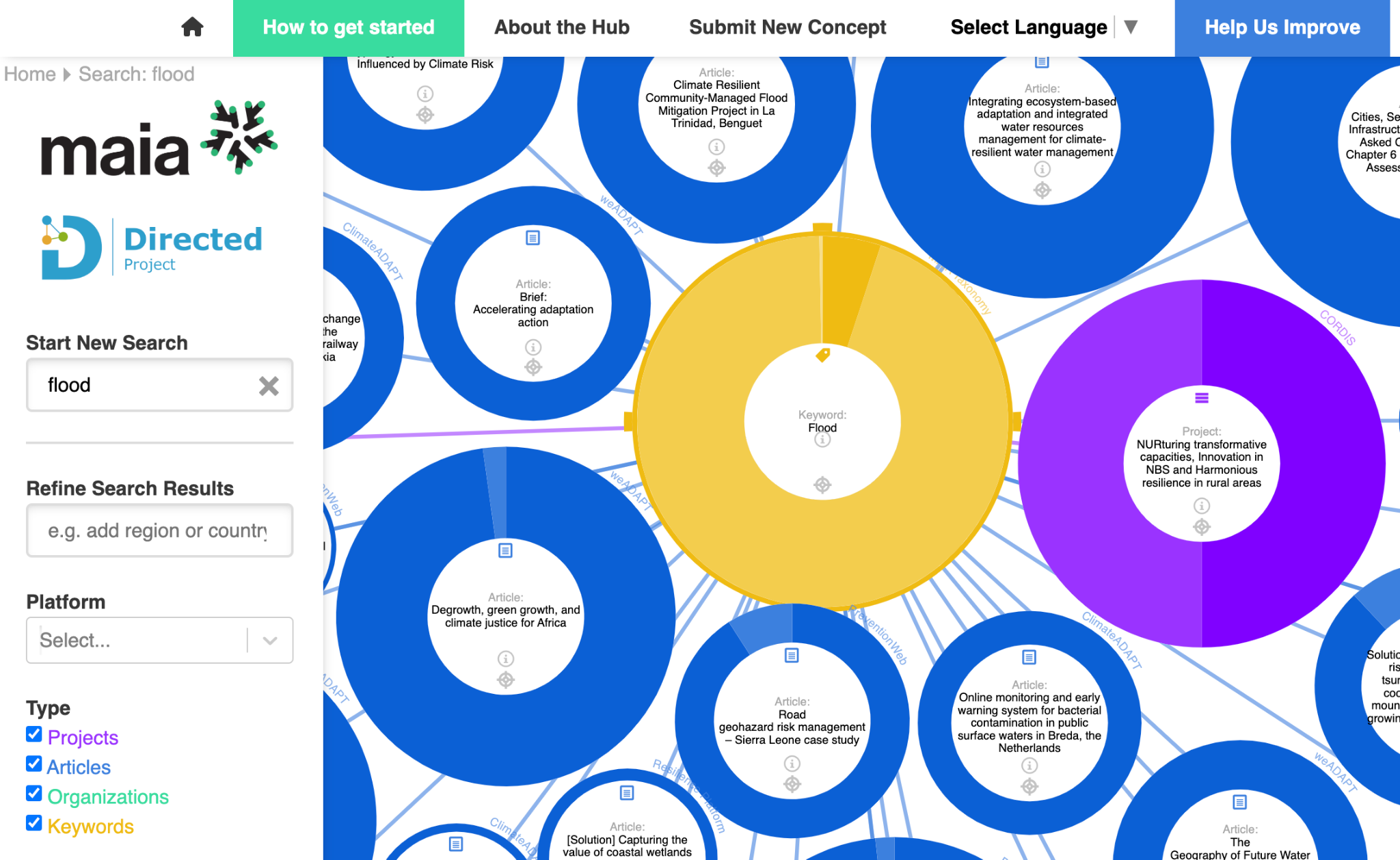
The Climate Connectivity Taxonomy drives the climate information visualization tool, the Climate Connectivity Hub, developed as part of several projects (PLACARD, MAIA1, Directed2 and FAIR2Adapt3). This note provides background on content, development, users, and usage of Version 1 and next steps of the Climate Connectivity Taxonomy.
What is the Climate Connectivity Taxonomy?
The Taxonomy aims to encourage a standardized approach to knowledge management connecting dispersed climate change knowledge, making it interoperable and reusable, facilitating access to a broad range of audiences. It drives data connections in the Climate Connectivity Hub and builds on IPCC AR6 Glossary, the UNDRR-ISC Hazard Information Profiles and expertly reviewed metadata from the following online platforms:
CORDIS, a comprehensive database of EU Research and Development projects, including those within the climate change and environment domain4.
PreventionWeb, the knowledge-sharing program of the United Nations Office for Disaster Reduction (UNDRR);
weADAPT, the global climate adaptation platform led by the Stockholm Environment Institute (SEI).
The Resilience Platform, an online space to capture, access, co-create and advance the latest resilience knowledge;
Climate-ADAPT, the European Climate Adaptation Platform.
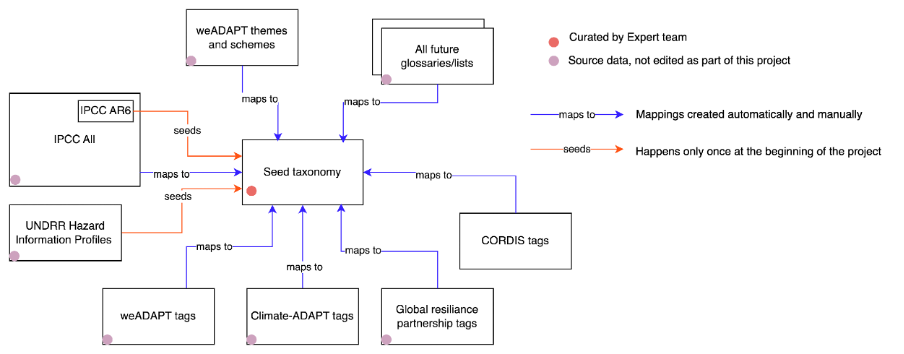
Figure 1: Schematic of sources and online platforms used to seed and enhance the Climate Connectivity Taxonomy (source: Bharwani et al., 2026).
Who is the Taxonomy for?
Researchers seeking consistent terminology across studies and datasets.
Data managers and website developers who need to integrate climate vocabularies for enhancing content interoperability and discoverability.
Tool developers aiming to improve user experience with dynamic term definitions and metadata integration.
How can you use the Climate Connectivity taxonomy?
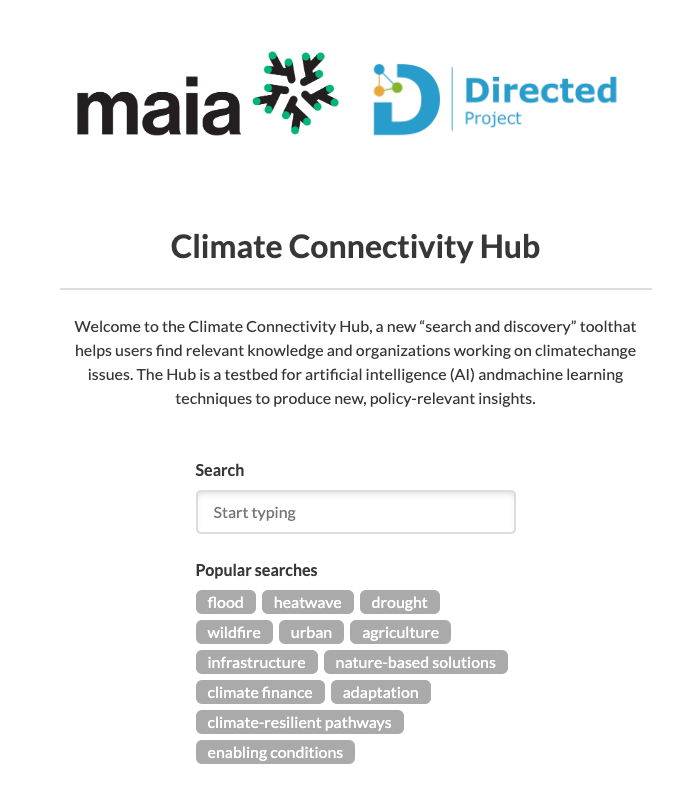
Import the taxonomy via our API (see Latest version), and explore its use in the Climate Connectivity Hub. Have a go at using the tool and fill out this survey to provide feedback which will help improve the Hub and the Taxonomy.
 |
 |
|---|
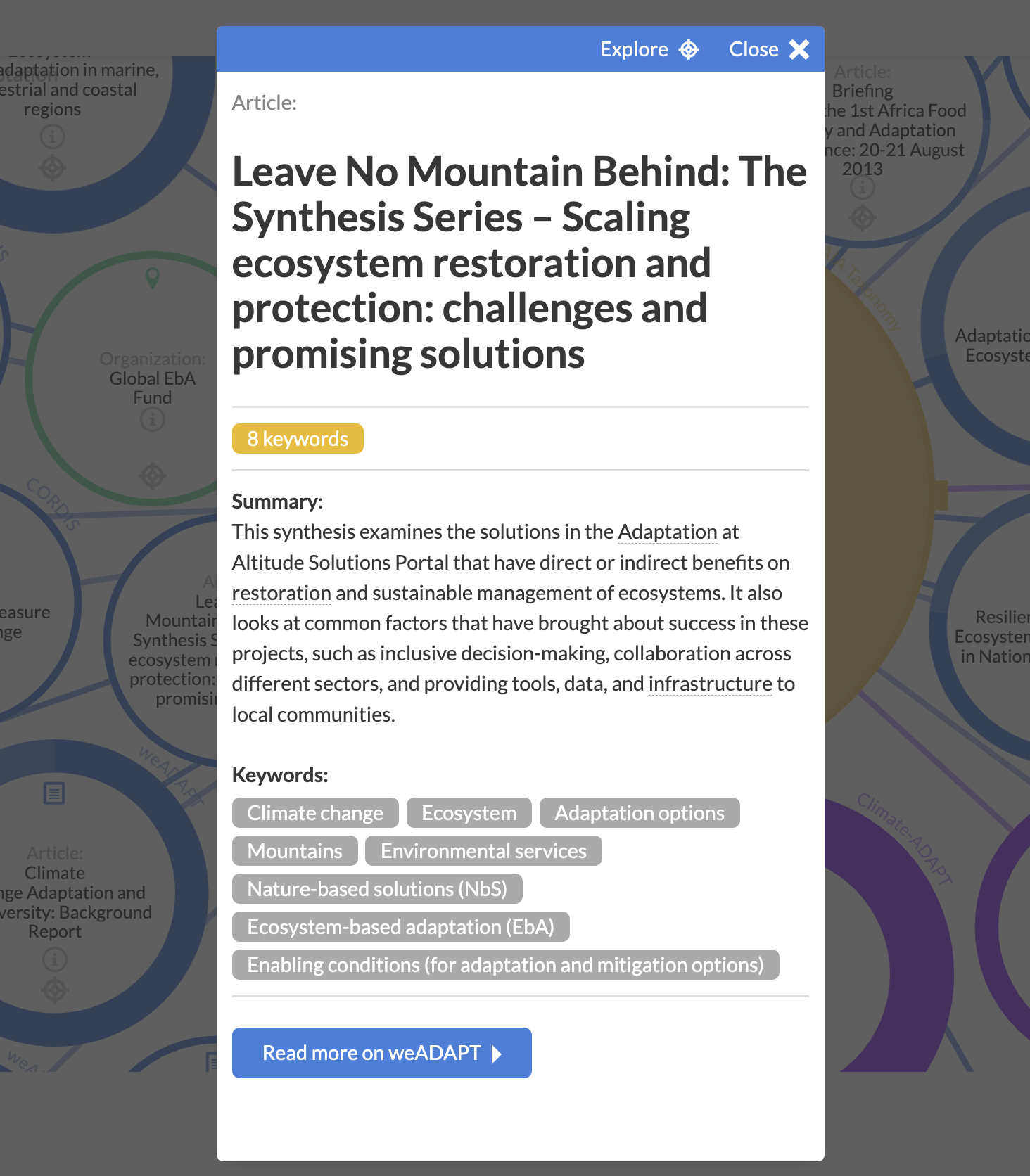
Figure 2: Searching the Climate Connectivity Hub to find articles on mountain adaptation
How can you contribute to the Climate Connectivity taxonomy?
Can’t find the term you’re looking for? Or have a different definition? You can submit a new concept and provide feedback/inputs by contacting sukaina.bharwani@sei.org. This may include reflections on how a term is used or perceived in your field, discipline, or professional context which may differ with or add nuance to the definitions and scope notes currently included in the Taxonomy. All feedback will be used to enhance version 1 and shape the development of version 2.
Embedded in the Climate Connectivity Hub, the Climate Connectivity Taxonomy enhances semantic interoperability, helping tools, platforms, and users speak the same language when navigating climate-related knowledge.
Before suggesting a new concept, you may want to familiarise yourself with the Climate Connectivity Taxonomy scope (see terminologies’ focus areas below).
Latest version API
Version 1.1, 27 August 2026
Version 1.1: http://connectivity-hub.com
This version builds on the previous and was developed through the DIRECTED and FAIR2Adapt projects and includes the development of a SKOS-supported web tool and repository, available at: https://fair2adapt.github.io/climate-connectivity-taxonomy/connectivity-hub.com/terms/index.html The tool enables users to search, filter and visualise concepts within the Climate Connectivity Taxonomy, with potential for future development of more advanced Boolean and query-based search functionality.
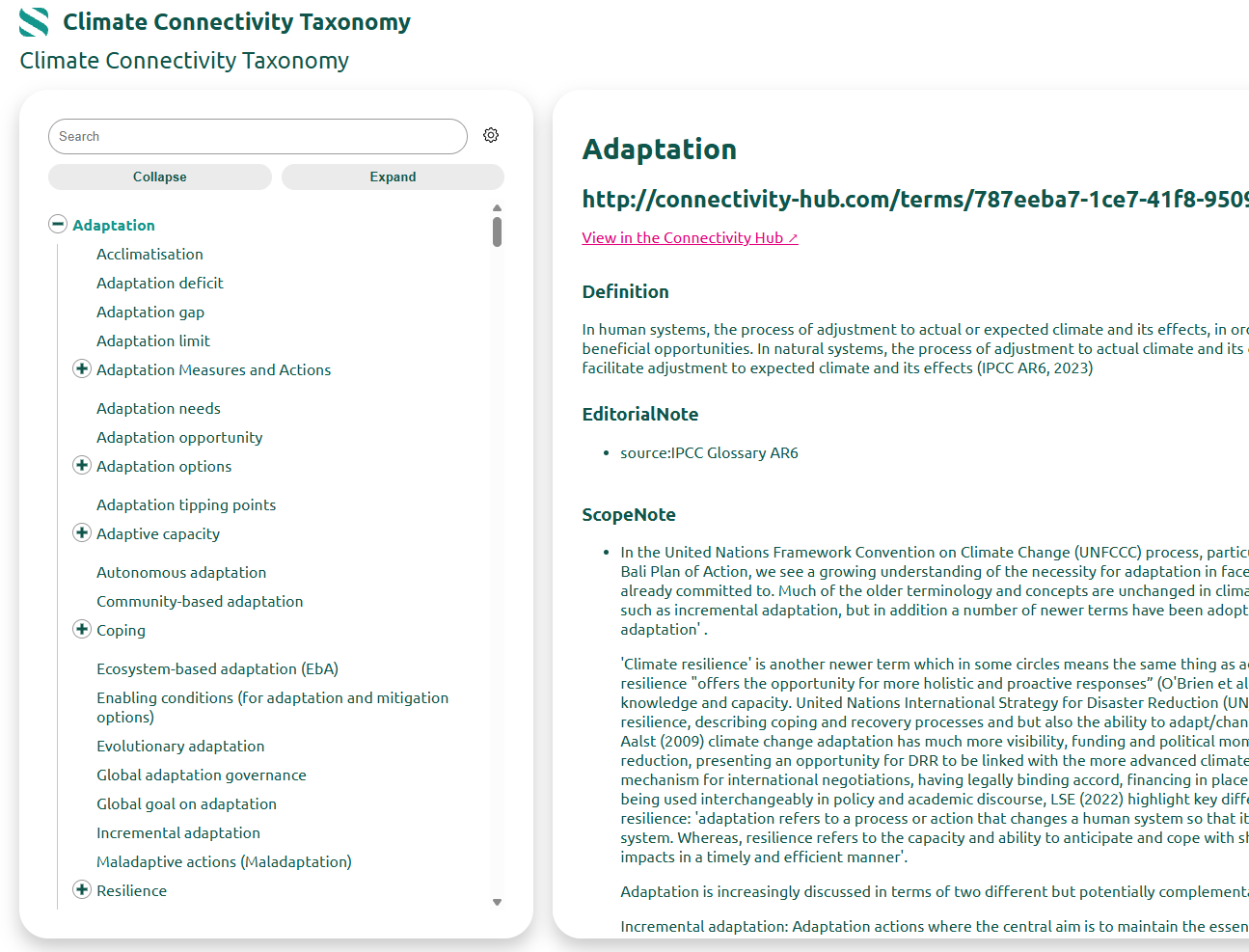
Figure 3: FAIR2Adapt’s SKOS-supported web tool showing a visualisation of Adaptation and narrower terms (left) plus definitions and scope notes (right)
The update responds to key gaps in existing climate change adaptation (CCA) vocabularies, identified primarily through a review of existing taxonomies (Bharwani et al., 2026), complemented by ongoing discussions with colleagues and emerging research needs across related projects. The focus was on strengthening concepts that are particularly important for understanding how and why people and societies adapt, the factors that enable or constrain adaptation, and what adaptation achieves.
The revision therefore expanded the Climate Connectivity Taxonomy through the addition of new concepts, definitions and scope notes, alongside a more structured network of broader, narrower and related concept relationships. In particular, the update strengthened coverage of three areas that were comparatively underdeveloped in existing CCA vocabularies:
Adaptation outcomes and benefits: capturing what adaptation achieves and the different types of outcomes and benefits that may result;
Adaptation barriers and enablers: capturing the factors that constrain, facilitate or shape adaptation; and
Adaptation measures and actions: capturing the interventions, approaches and solutions through which adaptation is implemented.
Together, these additions strengthen the taxonomy's ability to represent the relationships between adaptation drivers and context, actions and measures, and resulting outcomes and benefits, providing a more useful vocabulary for connecting and discovering climate adaptation knowledge.
Thematic terminologies
| Thematic terminology | Focus and added value | Background |
|---|---|---|
| GAMI dataset – quotes relating to evidence of reduced risk outcomes (not public) | Adaptation (focus on sectors like agriculture, infrastructure where there is most evidence) | Systematic review of research literature on the evidence of implemented CCA globally. Used to inform IPCC AR6, AGR etc. |
| Adaptation benefits – Carr and Nalau 2023 | Adaptation concepts: adaptation benefits, adaptation rationales | Proposes a typology of adaptation benefits; review of frequency they are delivered by GEF projects. Discussion of adaptation rationales. |
| Barriers and Enablers discussion in IPCC AR6 Ch 17 2022 | Adaptation barriers/enablers typology | The chapter on Decision-Making Options for Managing Risk discusses main categories of adaptation barriers/enablers |
| CLIMATEFIT Glossary D7.4 v10 (not public) | Climate finance terms – describing financial barriers - other terms in the Glossary may be added at a later date | Glossary developed as part of the CLIMATEFIT Mission adaptation project, which focuses on attractiveness of adaptation and resilience projects to private sector |
| Climate-ADAPT platform: Adaptation options (part of Climate-ADAPT resource catalogue) | Solutions for the agriculture sector - other terms in the catalogue may be added at a later date | Adaptation options are strategies and measures that are available and appropriate for addressing climate change adaptation (currently contains 65 adaptation options). |
Curated terminologies
| Curated terminologies | Focus and added value | Background |
|---|---|---|
| Transboundary climate risks – curated from a set of robust sources. | Climate adaptation efforts also need to be considered and assessed from a global perspective, recognising their cross-border, complex nature and the potential for cascading and compounding impacts. | SEI is a leader in this field through the Adaptation Without Borders initiative. This provided a database of robust sources and definitions. |
| Capacity development | Approaches and considerations for stakeholder engagement and capacity development in project design – applicable across fields and disciplines. | DIRECTED – an EU-funded Horizon Europe project on disaster resilience for extreme climate events through improved data accessibility, communication and risk governance. This sub-set of terms came from the Tandem Capacity Development modules. |
Existing terminologies
| Existing terminology | Focus and added value | Background |
|---|---|---|
| Disaster Resilient Infrastructure (DRI) Lexicon (continuation of V1) | Disasters, Infrastructure | The DRI Lexicon built on existing glossaries in the disaster risk and climate change domains (e.g. UNDRR and IPCC). A co-creation approach was used to refine the scope of the Lexicon. A panel of subject matter experts from across government, private and non-profit sectors and academia, representing different geographies and disciplines, developed definitions for priority terms based on the Coalition for Disaster Resilient Infrastructure’s objectives and actions. An Advisory Committee provided strategic guidance and inputs and the final set of terms and working definitions were submitted for a global consultation, in which over 100 comments were received from 18 countries. |
| Citizen engagement, based on the terminologies used by NERC and Co-production Network for Wales | Citizen engagement, Stakeholders, Co-production of knowledge | The Natural Environment Research Council (NERC) Public Engagement glossary of terms was created to provide internal clarity and consistency whilst recognising the conceptual complexities in the field. Similarly, the Co-production Network for Wales glossary of engagement terminology seeks to reflect current good practice in engagement, co-production and involvement in the Welsh public services context. Together, they provide a robust set of definitions to unpack different citizen engagement approaches and principles. |
Version 1.0, 13 June 2025
The Climate Connectivity Taxonomy (v1) is composed of terms from: 1) existing robust and credible climate change and disaster risk reduction terminologies; 2) curated thematic terminologies, shaped by project/platform needs and demands; and 3) ‘tags’ that are used to describe content hosted on online knowledge platforms which are verified and accepted for inclusion by experts. The latter includes pre-existing tags as well as those that have been generated using a large language model (LLM), in the absence of such descriptors. The content of the Climate Connectivity Taxonomy (v1) - using these three approaches - is summarized in the tables below (source: Bharwani et al., 2026):
Existing terminologies
| Existing terminologies | Focus and added value | Background |
|---|---|---|
IPCC AR6 Glossary (seed taxonomy) |
Climate mitigation, adaptation, policy processes | The online Intergovernmental Panel on Climate Change (IPCC) Glossary Search collates the terms and definitions used in the Sixth Assessment Cycle (AR6) and earlier IPCC assessment and special reports. It lists terms alphabetically, with terms linked to related, parent, and child terms where relevant. |
UNDRR-ISC Hazard Information Profiles (seed taxonomy) |
Hazards | The UNDRR-ISC HIPs was compiled from existing hazard glossaries and terminologies, using criterion to define the scope of those collected. The technical working group used an iterative process of developing and reviewing the hazards listed through extensive consultation with over 500 technical experts from relevant science groups, UN organizations, the private sector, and other partners. The hazard list comprises 302 hazards grouped according to 8 clusters: meteorological and hydrological hazards; extraterrestrial hazards; geohazards; environmental hazards; chemical hazards; biological hazards; technological hazards; and societal hazards. Hazard definitions were sourced from the highest possible authority e.g. the UN agency responsible for providing guidance on the hazard. The definitions also reflect scientific consensus on the issues addressed, and are of broad international relevance. To help compile consistent definitions and descriptions for the hazards listed, the technical working group developed a common template to be applied to all hazards. A hazard information profile has been given for all hazards. |
| Myriad-EU Handbook of Multi-Hazard, Multi-Risk Definitions and Concepts (sub-set integrated, more terms to be added) | Adaptation, disaster risk, vulnerability, multidisciplinary methods | The Myriad-EU Handbook adopted and built on a rich existing body of established glossaries. This was complemented by internal consultations and data-generating exercises; literature reviews; and external stakeholder engagement. 140 terms are included in the glossary, 102 related to multi-hazard, multi-risk, disaster risk management and an additional 38 due to their relevance to the project, acknowledging the need for a common understanding amongst an interdisciplinary project consortium covering topics such as research methods. It includes definitions for each of the terms, as well as related terms where applicable, drawing on already established glossaries so that terms are not defined afresh. |
| Taxonomy for Classifying UNICEF Research, Study and Evaluation (sub-set integrated, more terms to be added) | Research methods and approaches | The UNICEF taxonomy was derived from a literature review, an internal consultation with key stakeholders, and a comparison of other relevant international development organizations. It is organized around three master terms – ‘research’, ‘evaluation’ and ‘study’ – and their typologies. The second level of the taxonomy consists of cross-cutting technical terms – strategies, designs, methods, and outputs – applicable to one or more of the master terms. It provides definitions for all of these terms. |
| Disaster Resilient Infrastructure (DRI) Lexicon (sub-set integrated, more terms to be added) | Disasters, Infrastructure | The DRI Lexicon built on existing glossaries in the disaster risk and climate change domains (e.g. UNDRR and IPCC). A co-creation approach was used to refine the scope of the Lexicon. A panel of subject matter experts from across government, private and non-profit sectors and academia, representing different geographies and disciplines, developed definitions for priority terms based on the Coalition for Disaster Resilient Infrastructure’s objectives and actions. An Advisory Committee provided strategic guidance and inputs and the final set of terms and working definitions were submitted for a global consultation, in which over 100 comments were received from 18 countries. |


Thematic terminologies
| Thematic terminologies | Focus and added value | Background |
|---|---|---|
Capacity development and disaster governance Data and modelling |
Approaches and considerations for stakeholder engagement and project design – both of which are applicable across fields and disciplines. Technical tools, models and approaches that may be used by or offered to professionals to enhance their work on climate resilience and disaster risk. |
DIRECTED – an EU-funded Horizon Europe project on disaster resilience for extreme climate events through improved data accessibility, communication and risk governance. |
Online knowledge platforms/databases
| Online knowledge platform/database | Focus and added value | Background |
|---|---|---|
| A range of content and case studies relating to climate change adaptation. Content is described and connected via user- and expert-curated tags for content on climate change adaptation, covering themes such as mountains, water, agriculture, gender, and finance. | weADAPT is a dynamic, collaborative space for knowledge exchange on climate change adaptation issues. It allows practitioners, researchers, students, planners and decision-makers at all levels to discover high-quality information, contribute their knowledge and connect with one another. It is designed to facilitate learning, knowledge exchange and collaboration to build a growing community of research, policy and practice on adaptation issues while developing policy-relevant tools and guidance for adaptation planning and decision making. |
|
| Information on EU Research and Development projects, in particular those relating to Horizon Europe Cluster 5 on climate neutrality and sustainable energy, Destination 1 - “Climate sciences and responses” and EU Mission Adaptation projects | The CORDIS database provides access to comprehensive information about EU Research and Development projects. | |
| A range of content relating to climate and disaster resilience. | The Resilience Platform is an online space to capture, access, co-create and advance the latest resilience knowledge. It provides the user base with the ability to upload and access resilience resources, including solutions, stories, people and initiative profiles, as well as the latest evidence and tools. It is supported by resilience practitioners, community leaders, policymakers, investors and knowledge partners. | |
| A range of content and case studies relating to climate change adaptation. | Climate-ADAPT is the European Climate Adaptation Platform helping users from across Europe access and share data and information on: expected climate change in Europe; current and future vulnerability of regions and sectors; EU, national and transnational adaptation strategies and actions; adaptation case studies and potential adaptation options; and tools that support adaptation planning. | |
| A range of content and case studies relating to disaster risk and resilience. | Prevention Web is a global knowledge sharing platform for disaster risk reduction and resilience. Its knowledge library covers disaster risk reduction, disaster risk management, climate change adaptation, and disaster resilience. The curated content includes replicable and scalable projects and initiatives, enhances catastrophe risk understanding, showcases efforts to meet the Sendai Framework targets, and promotes disaster risk reduction advocacy. |




A more detailed example of how the Large Language Model (LLM) is being used to support taxonomy development is provided in the Appendix.
3. Methodology
The development of the baseline Climate taxonomy
The most recent sixth assessment report (AR6) glossary of the United Nations Framework Convention on Climate Change (UNFCCC) Intergovernmental Panel on Climate Change (IPCC) and the United Nations Office for Disaster Risk Reduction (UNDRR) and the International Science Council (ISC) Hazard Information Profiles were selected as the basis for the ‘seed taxonomy’: a baseline taxonomy to which selected knowledge structures would subsequently be mapped, given their credibility and robustness in the fields of climate change and disasters respectively.
To complement this, over 35 glossaries or ‘knowledge structures’ (taxonomies, ontologies, and knowledge graphs) were sourced from a diverse range of platforms, including research projects, websites, and academic journals. A preliminary evaluation was conducted to examine the themes, origins, development trajectories, accessibility, and levels of detail of these knowledge structures.
Based on this assessment, 15 datasets were identified as the most pertinent and methodologically robust and were subsequently selected for further analysis within a mapping exercise. Mapping and comparing across the independent knowledge structures was necessary in maximising their complementarity and collective value. Note that taxonomies that were primarily designed and utilized for project or portfolio screening purposes were excluded from this in-depth evaluation.
4. Taxonomy visualization
Integration into the Climate Connectivity Hub
Following the creation of the baseline taxonomy, a hybrid approach was applied, combining
automated and manual mapping and analysis to expand and refine the Climate Connectivity taxonomy and dynamically connect content in the Hub. A hybrid approach both increases the efficiency with which large databases can be processed and analyzed and supports the preservation of semantic meanings and nuances. The approach is summarized below and visualized in Figure 4:
The IPCC glossary and UNDRR taxonomy, and associated meta-data, are imported as the seed taxonomy. This serves as the basis for the Climate Connectivity taxonomy.
Platform data (e.g. weADAPT, Climate-ADAPT, CORDIS) to be featured on the Hub is harvested. Identified content expertly curated by knowledge and platform managers, with valuable sets of keywords (terms), these platforms are mapped with and used to enhance the seed taxonomy. A large language model (LLM) is also applied across the platform data to generate new keywords based on text of the ingested content.
Both imported and generated keywords are automatically mapped and matched with terms in the seed (or updated, in subsequently iterated) taxonomy using LLM-based text similarity techniques. These new connections dynamically update the visualization of content in the Hub. Keywords imported from knowledge platforms and those generated by the LLM that are unable to be matched with terms from the Climate Connectivity taxonomy become ‘candidate’ terms, which are subject to expert review.
Candidate keywords can be viewed and manually accepted and/or rejected through the purpose-built admin panel for inclusion in the Climate Connectivity taxonomy; in turn, defining its scope. The order in which candidate keywords are processed is determined based on 1) frequency (i.e. keywords attached to the most content), or 2) their inclusion in existing and robust taxonomies (as identified in the collation and mapping exercise) selected to be integrated into the seed taxonomy.
Meta-data (e.g. definitions, synonyms, related terms) is manually added by topic experts in the taxonomy store to complement or supplement those imported from AR6 and UNDRR and provide additional contextual information.
All additions of keywords and their associated meta-data are stored and are reflected in an updated taxonomy. The Connectivity Hub is served by an Application Programming Interface (API) that uses the content and meta-data store (MongoDB, PostgreSQL) and the taxonomy store to return a ‘knowledge map’ relevant to the user’s search query (e.g. ‘adaptation’). That is, by importing content assigned to newly accepted terms, the Hub dynamically connects content, keywords, and organizations and returns a visualized ‘knowledge map’ relevant to the users’ search queries.
The cycle then begins again, using the updated taxonomy as the new source of keywords and these are re-applied to all existing source platform data. This process enables data to continuously remain connected and thus more discoverable.
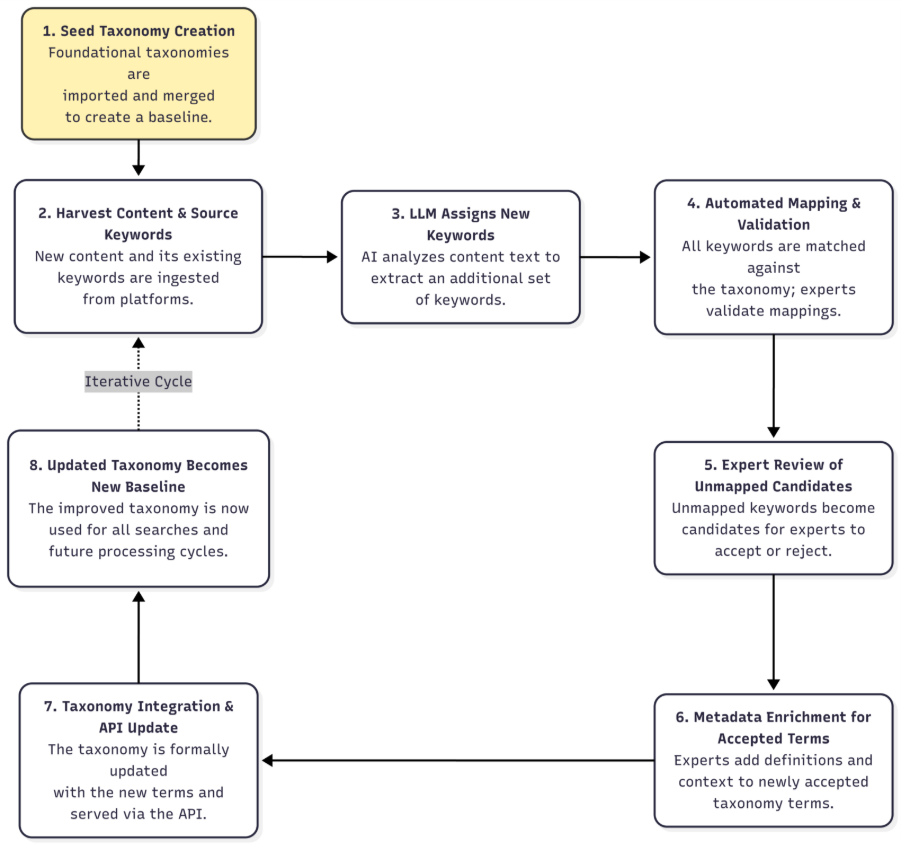
Figure 4: Curation of the Climate Connectivity Taxonomy (source: Bharwani et al., 2026).
5. Next steps
Incorporating stakeholder and expert insights in the Climate Connectivity Taxonomy
We recognize the diverse ways in which language is applied and understood across different contexts, disciplines, and groups of stakeholders. Work is ongoing to ensure these nuances are captured in the Climate Connectivity Taxonomy through a number of ongoing Horizon Europe projects and Innovation Actions, such as Directed. Version 2 of the Taxonomy will involve deeper engagement on the contextual meaning of Directed Real World Lab-specific climate and disaster risk related vocabulary through semantic analysis of existing documentation and through stakeholder engagement.
5. References
Bharwani, S., Williamson, K., & Wangrat, A. (2026). Scaling knowledge interoperability for accelerated climate action through the Climate Connectivity Hub and Taxonomy. Climatic Change 179, Article 48. https://doi.org/10.1007/s10584-026-04139-y
6. Appendix
Using a Large Language Model to support taxonomy development
Figure 2 provides a specific example illustrating the journey of a single content entity – an article on "New Methods Linking City Design and Sustainable Urban Agriculture Practices" and the application of the Large Language Model (LLM). This visualization demonstrates how content is analyzed, linked to the Climate Connectivity Taxonomy, and contributes to its growth via candidate term generation and review (source: Bharwani et al., 2026).
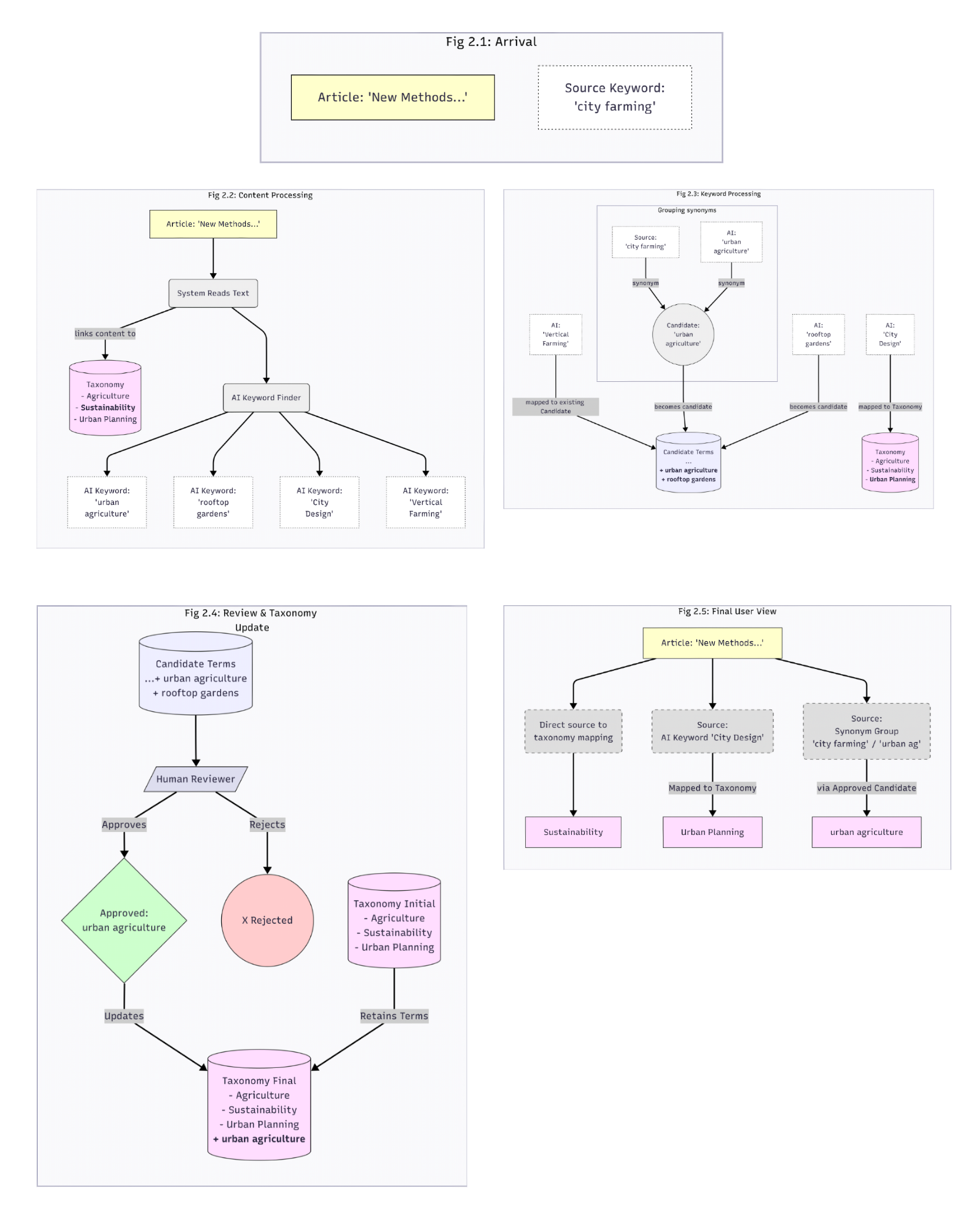
Figure 2: The journey of a hypothetical piece of content through the taxonomy curation process (source: Bharwani et al., 2026).
Figure 2.1 (Arrival): The example article is ingested into the system. It arrives with a pre-existing source keyword ('city farming') associated with it.
Figure 2.2 (Content Analysis & AI Keywords Appear): The system processes the ingested content. Firstly, as part of the mapping efforts, the textual content itself is analyzed for conceptual links to the existing Climate Connectivity Taxonomy. In this instance, a link to the 'Sustainability' term is established. Secondly, corresponding to Step 3 of the overall process, Large Language Model (LLM) techniques are employed to extract relevant keywords directly from the article's text, independent of source tags. Here, the AI generates 'urban agriculture', 'rooftop gardens', 'City Design', and 'Vertical Farming'. These keywords are now associated with the content item alongside its source keyword.
Figure 2.3 (Keyword Mapping & Candidate Generation): All associated keywords ('city farming', 'urban agriculture', 'rooftop gardens', 'City Design', 'Vertical Farming') are checked against the current CC Taxonomy and the existing candidate term list using LLM-based semantic similarity matching.
A match is found for the AI keyword 'City Design', which is mapped to the existing Taxonomy term 'Urban Planning'.
A match is found for the AI keyword 'Vertical Farming', which is mapped to an existing term within the candidate term list. Keywords that do not find a suitable match ('city farming', 'urban agriculture', 'rooftop gardens') become potential new candidate terms. Synonym detection, potentially part of the similarity analysis, identifies 'city farming' and 'urban agriculture' as synonyms; 'urban agriculture' is chosen as the representative term and suggested as a single new candidate for this group. The remaining unmapped keyword, 'rooftop gardens', is suggested as an individual new candidate Term.
Figure 2.4 (Review & Taxonomy Update): This figure reflects the expert curation process. The newly generated Candidate Terms ('urban agriculture', 'rooftop gardens') are presented to experts for review. In this example, 'urban agriculture' is approved, while 'rooftop gardens' is rejected. The single approved term is then formally integrated into the Climate Connectivity Taxonomy, permanently enriching it.
Figure 2.5 (Final User View): This final figure illustrates the outcome for the end-user, representing the dynamic 'knowledge map' presentation. The original article is now displayed with explicit links to the relevant terms within the finalized CC Taxonomy. The figure highlights the provenance of these links, demonstrating the different pathways through which categorization occurred:
The link to 'Sustainability' was derived directly from the initial Content Analysis.
The link to 'Urban Planning' resulted from the AI Keyword 'City Design' being directly mapped to that Taxonomy term.
The link to 'urban agriculture' was established because the synonym group ('city farming'/'urban agriculture') generated a candidate term that was subsequently approved by experts and added to the Taxonomy.
(Note: As per the clarification that only terms formally in the Climate Connectivity Taxonomy contribute to the final user view, the link established via the keyword 'Vertical Farming' mapping to an existing candidate in Figure 2.3 is not shown here, as that candidate was not depicted as being formally approved and added to the main Climate Connectivity Taxonomy in this specific example flow.)
This demonstrates how the cyclical process connects content through multiple analysis and curation layers, providing rich, traceable links within the dynamically updated knowledge Hub.
Maximising the Impact and Accessibility of European Climate Research. Grant agreement ID: 101056935↩︎
Disaster Resilience for Extreme ClimaTe Events providing interoperable Data, models, communication and governance. Grant agreement ID: 101073978↩︎
FAIR2Adapt: Grant agreement No. 101188256↩︎
These are currently limited to Horizon Europe Cluster 5 projects, focussed on climate neutrality and sustainable energy, Destination 1 - “Climate sciences and responses” and EU Mission Adaptation projects.↩︎